Cable glands for the cable entry. ePTFE vent plugs for the breathing port. Spring-loaded relief valves for the pressure spike. Every hole through the wall of a sealed cabinet needs one of the three — and we engineer, specify and verify all of them, built to your drawing when a catalogue part will not do.
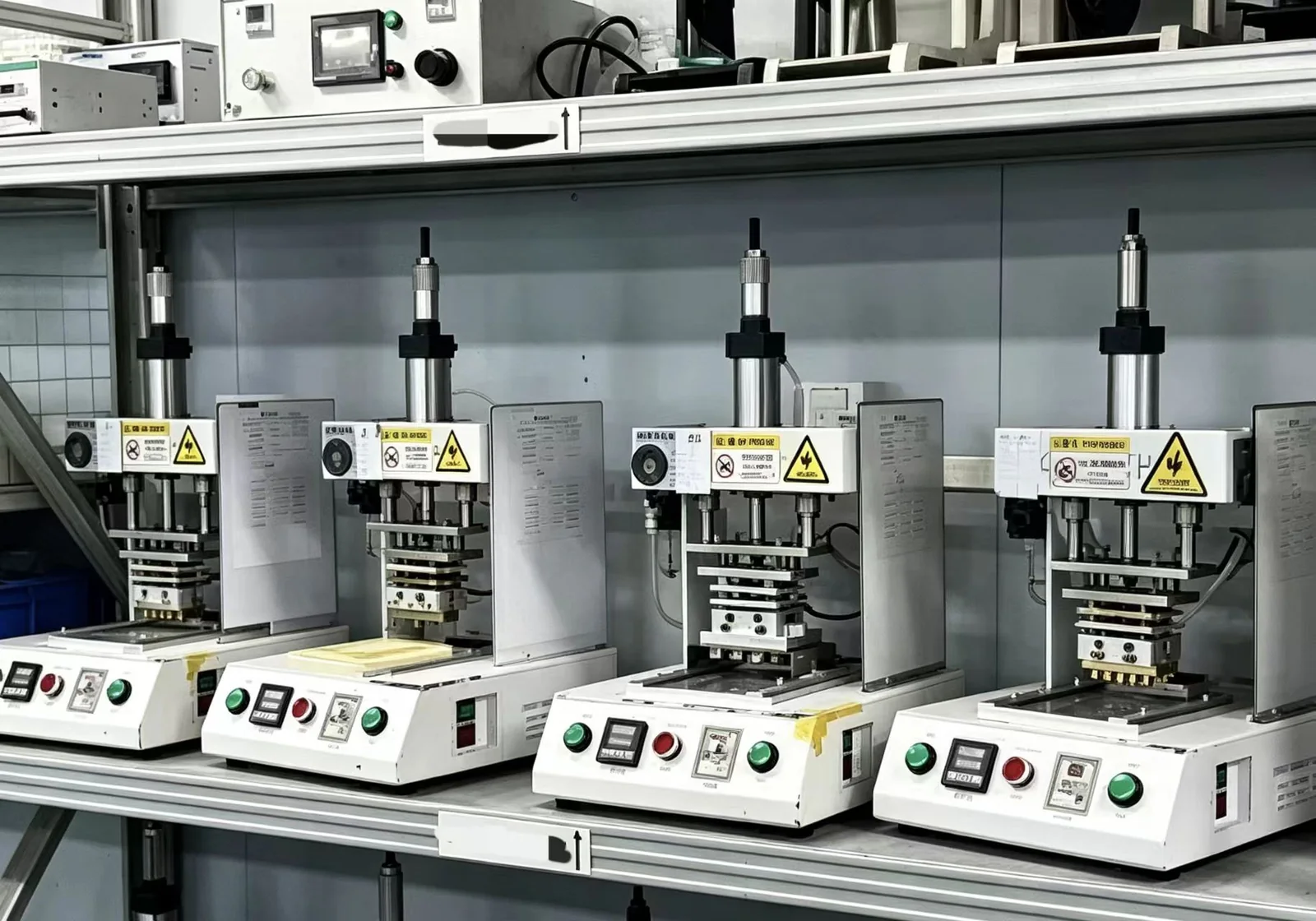 Production floor
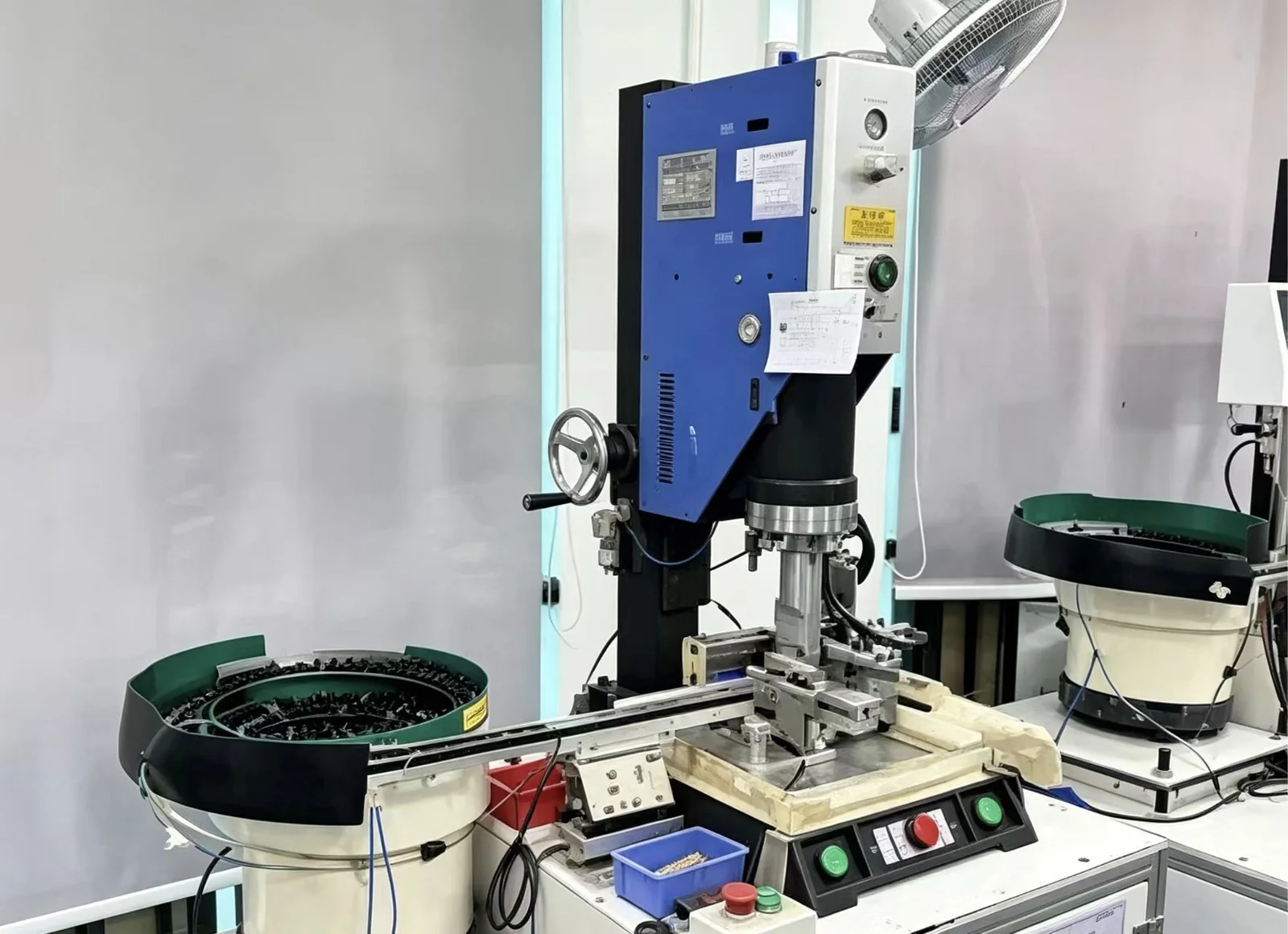 Automation
 Quality gate
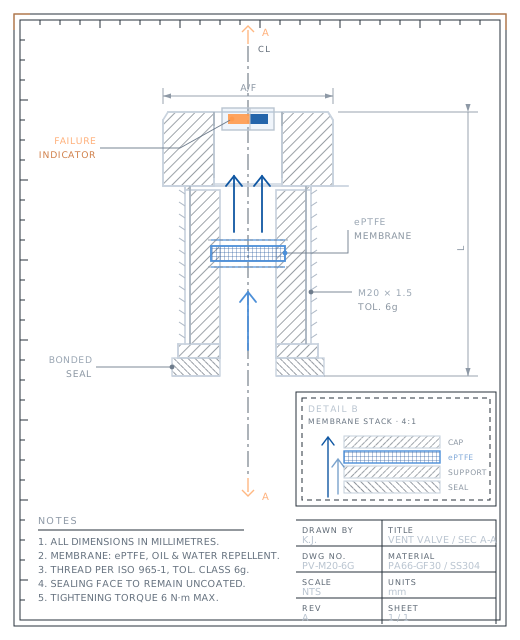 Product

Every project starts from your enclosure: internal volume, pressure delta, temperature swing and cleaning process. We size the vent, then the valve.
Membrane lamination, bonding and sealing are specified to our own process sheet and checked against it, so airflow and water-entry performance stay repeatable lot to lot.
Standard parts ship from stock; modified and fully custom vents are quoted with a firm tooling cost and sample date before you commit.
Airflow, water entry pressure and cycle results are reported per lot. If a figure is not verified yet, we say so instead of printing a rounded number.
Everything a cabinet needs from the outside world has to cross its wall — power, signal, air and pressure. Every crossing is an opening, and every opening is a place where the IP rating can be lost.
Where power and signal cables cross the wall. The seal is made in three places at once — on the cable sheath, on the enclosure entry face, and at the locknut.
A sealed box still has to breathe. A laminated ePTFE membrane equalises pressure without passing liquid water, keeping the door gasket inside its compression range.
A fast pressure rise — thermal event, arc, rapid power cycling — will not pass a membrane quickly enough. A spring-loaded valve opens at a defined pressure and reseats.
Knockouts and pre-drilled entries that ship unused still have to be closed. Give us the thread and quantity in the same enquiry and we will quote the sealing plug alongside.
Sizing a gland is not a catalogue lookup either — the clamping range has to match your cable outside diameter, and the thread has to match the hole. M, PG, G and NPT threads are not interchangeable. Send us the cable OD and the tapped hole and we will pick the part.
The catalogue below is live — every part shown is one we can quote and ship. Cable glands, vent plugs and relief valves are added as stock and development projects come in. If nothing here fits, send the drawing and we will quote it to your print.
Specifications are configuration-dependent — membrane grade, thread and seal are selected per application. Ask for a verified datasheet for your part number.
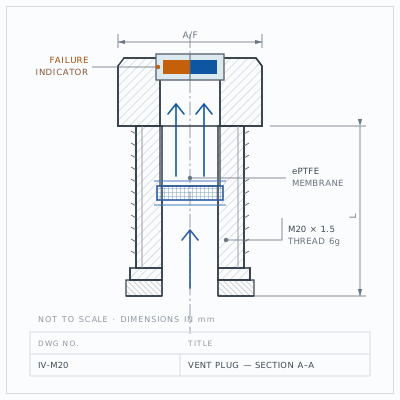
A blocked or wetted membrane looks identical to a healthy one until water is already inside the cabinet. Our current development programme puts the failure on the outside of the enclosure.
Airflow, water-entry pressure, thermal cycling and salt-spray figures have to exist before a part number is released — from the lot test record or an independent lab, and named on the quotation.
Indicator integration and the sealed window joint are the subject of a filed utility model. Details under NDA.
If your enclosure heats, cools, climbs altitude or gets washed, the internal pressure changes. These are the fields we supply most often.
Containerised and cabinet storage sees the widest thermal swing of any enclosure. Venting avoids gasket fatigue and door distortion while keeping IP sealing intact.
Liquid-cooled packs need pressure relief as well as breathing. Spring-loaded relief valves handle fast pressure rises and hold their set point through thermal cycling.
Outdoor chargers take sun, rain, hose-down and rapid thermal cycling in a single day. Vents equalise pressure without letting water past the seal.
Pole and roof-mounted equipment cycles between direct sun and night cooling. A vent plug removes seal stress and condensation risk in one part.
Inverter and combiner enclosures are sealed for a 20-year life. Venting keeps the gasket within its compression range for the whole service interval.
Wash-down machinery, drive housings, industrial luminaires and sensors — wherever a sealed box is pressure-tested by its own operating temperature.
We came to this from the other side of the drawing: sizing vents for battery packs and cabinets, then investigating why a seal that had passed validation failed eighteen months into service. That investigation is where we started — and it keeps opening into new product lines.
We are focused on one job — sealing a sealed enclosure. Cable entries, breathing ports, pressure-relief points: every hole through the wall is our territory, and the product family grows inside that boundary rather than sideways out of it. Every part is checked against a written specification and inspected on arrival; the membrane lamination, bonding and airflow testing behind our own vent range are specified by us and verified against a written process sheet.
What that buys you in practice: direct access to the engineer who designs your part, a measured test record for the batches you receive, and a straight answer — including "we cannot verify that yet" — when a requirement sits outside what we can prove today.
“If we cannot measure it, we do not print it on a datasheet.”
Bonding, insertion and the airflow check. Everything downstream of these three is packaging.
The membrane stack is staked into the housing on presses where dwell time and pressure are set per part number — logged against the lot, not set by feel.
Bowl feeding and a servo press seat the small inserts to a checked depth. This is the step an operator hand-feeding parts gets wrong first.
Airflow and water-entry pressure are verified before packing. Parts outside the band are quarantined, not reworked into the next batch.
Vents are safety-adjacent parts. We publish the state of the programme rather than implying everything is in mass production.
Ask us directly and we will send the current test record for that part number, including the items still outstanding.
Ask an engineerPA66, stainless and brass vent plugs from M5 to M20×1.5, with laminated ePTFE membranes and bonded seals. Available now, shipped worldwide with a batch test record.
Lamination, bonding and oleophobic treatment are specified on our own process sheet, with airflow and water-entry screening on every lot.
M20×1.5 housing with colour-change indicator behind a toughened window. Sensitivity, ageing and cycle life are still open items; samples available for design-in evaluation.
Spring-loaded relief with an anti-icing collar, aimed at NEV battery-pack thermal management where condensate freezing can lock a conventional valve.
Independent IP-rating and salt-spray reports for the main part numbers, plus material declarations for automotive customers.
Vented area is not a catalogue lookup — it depends on volume, temperature swing, the pressure at which your gasket starts to leak, and the fastest rate of change you can expect. Send us these four numbers and we will do the arithmetic.
Start a technical reviewThe questions buyers ask us before the first order. If yours is not here, write to us — we answer with a number or a test report, not a brochure.
Enclosure volume, temperature range and target IP rating are enough to start. No obligation, no scripted sales sequence.