A vent plug is a five-part assembly that has to survive a decade of pressure cycles. The steps that decide its life — membrane lamination, bonding and sealing — are written into our own process sheet, run at plants we have qualified, and inspected when they come back.
Expanded PTFE is the default choice for a reason: a microstructure of interconnected nodes and fibrils that passes air while resisting liquid water, chemically inert across the temperature range a battery pack or a telecom cabinet will ever see.
The material is not the difficult part — buying it is easy. What decides whether a vent still works in year three is the process around it: how the membrane is laminated to its support layer, how the bond to the housing is made, and whether the airflow path stays clear once dust and oil mist are in the picture.
We control those three steps ourselves, which is why we can adjust a membrane stack for an oil-mist environment or a wash-down duty cycle instead of offering a single grade and hoping it fits.
Handing any one of these over without a written sheet is where consistency usually goes wrong — so we specify each step and verify what comes back.
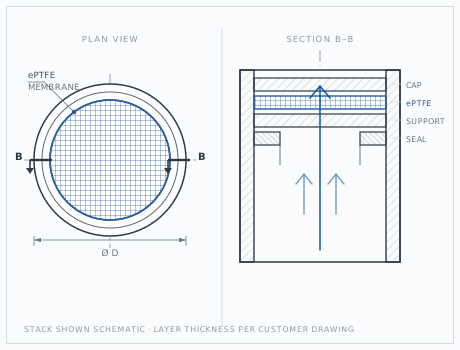
ePTFE is laminated to its support layer and treated for oil resistance. Airflow is checked on the laminate before it is cut, not on the finished valve.
The membrane stack is bonded into the housing with a process matched to the polymer. The bond is the part that fails first in the field if it is rushed.
Injection moulding for polymer bodies to your drawing, CNC for brass and stainless parts. Both run at plants we have qualified, with threads gauged on incoming inspection rather than assumed.
Seals fitted, airflow and water entry checked by lot, then packed to your specification with the record for that lot attached.
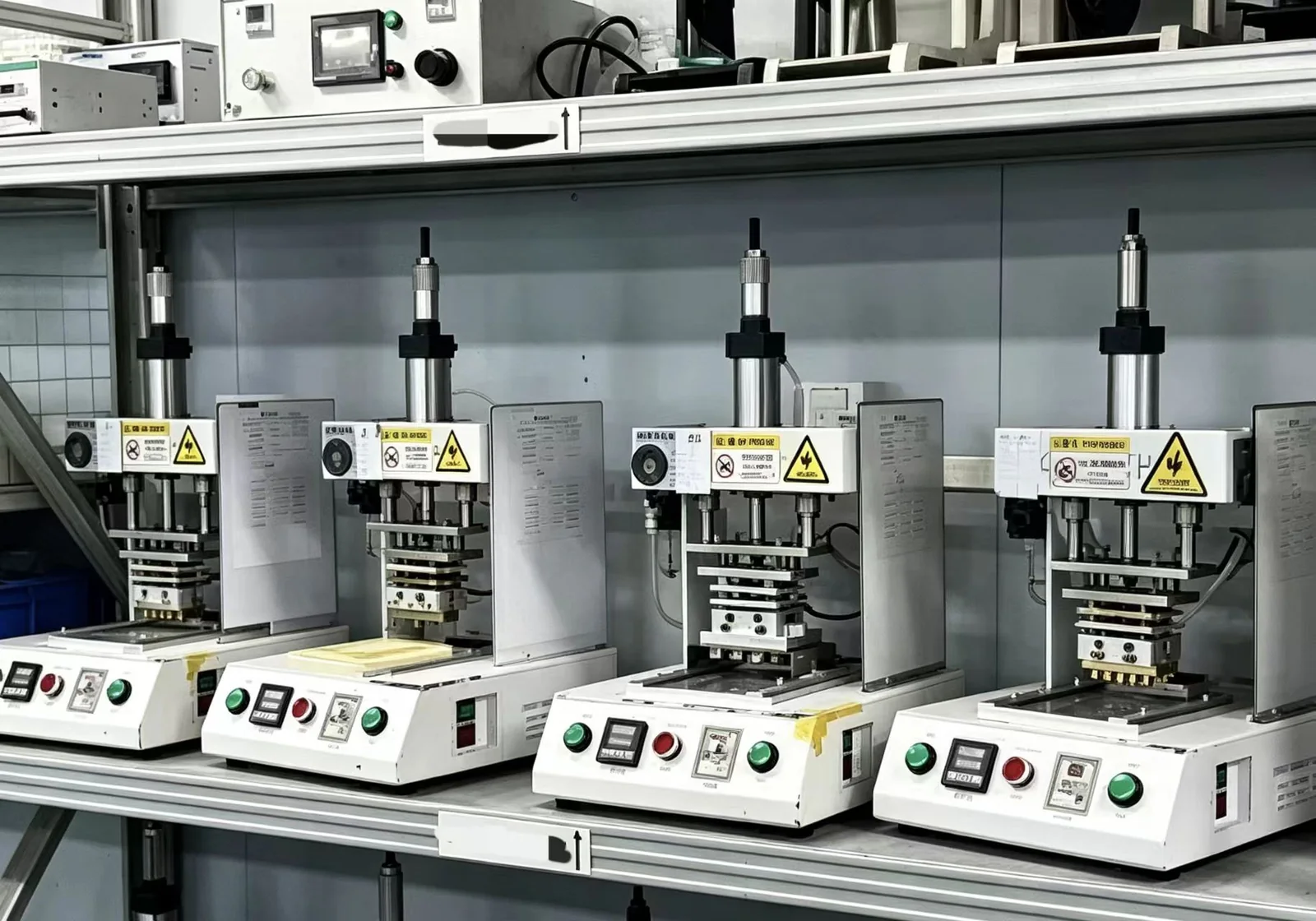
Dwell time, pressure and platen temperature are set per part number. The profile is recorded with the lot so a re-run can be matched, not guessed.
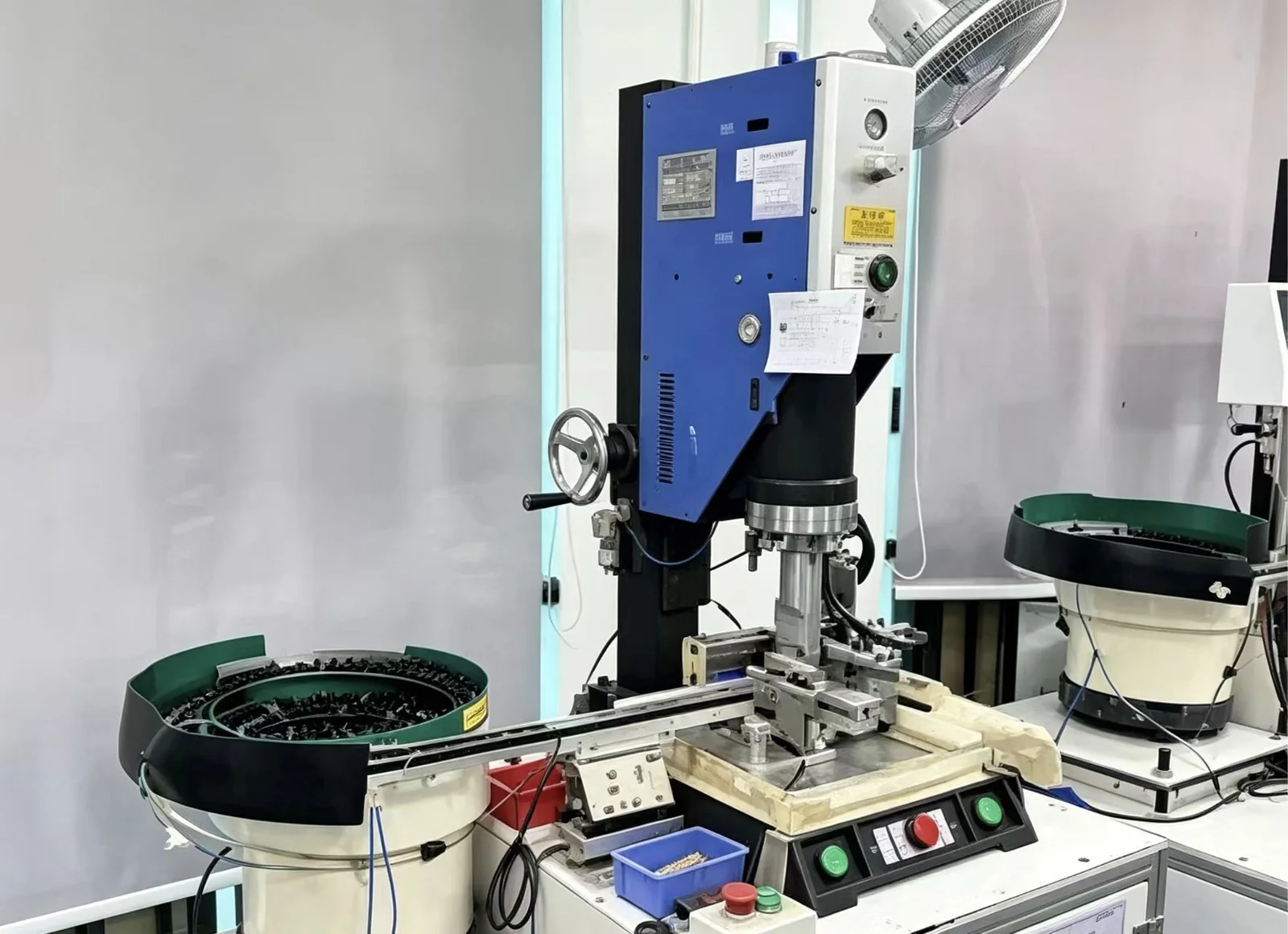
Bowl feeding removes the hand-loading variance. Seat depth and press force are verified at the start of every run, not once at the start of the project.

Airflow is measured against the band agreed on your drawing, and water-entry pressure is confirmed in the same pass. The number on the datasheet comes from here.
These are the checks each part has to pass before it is quoted as a released part number. The figures come from the lot test record or from an independent lab — we name which on the quotation. Third-party certification for IP rating and salt spray is being added to the programme.
| Test | What it tells you | Method | Applied to | Reported |
|---|---|---|---|---|
| Airflow | Whether the vent can actually equalise at the rate your enclosure needs | Pressure-decay flow bench | Every production lot | Per lot |
| Water-entry pressure | The pressure at which liquid water is driven through the membrane | Rising-pressure water column | Every production lot | Per lot |
| Leak / seal integrity | Whether the housing joint and seal hold before the membrane sees load | Air-pressure decay | Every production lot | Per lot |
| Thermal cycling | Whether airflow drifts as the assembly expands and contracts | Programmable chamber, independent lab | New part numbers, programme parts | On qualification |
| Salt-spray screening | Corrosion behaviour of metal bodies and plated parts | Salt-fog exposure | Metal parts, coastal applications | On qualification |
| Dimensional | Thread fit and sealing-face geometry against the drawing | Gauges and optical measurement | First article, then sampling | First article |
| IP rating | Ingress protection against dust and water jets or immersion | Third-party, in progress | Main part numbers | Programme item |
Reported per lot. Production parts ship with the test record for that lot, so the numbers you receive describe the parts you received — not a promotional figure for the series.
What is not tested yet. Independent IP-rating and salt-spray certificates are an active programme item, not a claim we make today. Ask for the current status on your part number and we will give you the honest version.
Custom test protocols. If your qualification plan calls for a specific procedure, send it with the enquiry and we will tell you whether we can run it ourselves or need an external laboratory.
A blocked or wetted membrane looks exactly like a healthy one from the outside. This programme puts the condition of the vent where a maintenance engineer can see it without opening the enclosure.
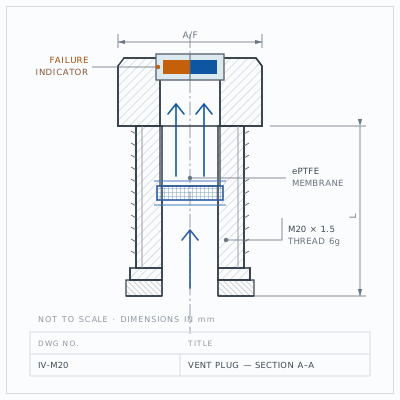
It is the gap we kept running into as engineers: no economical way to know whether a vent was still working.
Operators of distributed ESS, charging networks and remote telecom sites — anywhere a site visit is expensive.
Vents sit next to gaskets, seals and safety functions. We tell buyers exactly what is released, what is in validation and what is still an idea, because a surprise on the qualification test bench is far more expensive than an honest email on day one.
For any part number on this site, we will send the latest test data we hold and state plainly which items remain outstanding.
Ask an engineerM5 to M20×1.5 in PA66, PC, SS304 and nickel-plated brass, with laminated ePTFE membranes and bonded seals. Available now.
Lamination, oleophobic treatment and insert bonding are specified on our own process sheet and run at our membrane partner, with airflow and water-entry figures reported per lot.
Adhesive-backed ePTFE patches from Ø6 mm to Ø28 mm, die-cut to shape on request.
Sensitivity, ageing and cycle life are still open items. Prototypes available for design-in evaluation.
Spring-loaded relief with an anti-icing collar at the seat, aimed at liquid-cooled battery-pack thermal management.
Independent IP-rating and salt-spray reports for the main catalogue part numbers, plus automotive material declarations.
Incoming inspection, in-process checks and outgoing test records — the same discipline an automotive Tier-2 is audited for, applied at the scale we currently operate.
Membrane, polymer and metal stock are checked on receipt against the specification used in the venting calculation, and traced by lot through production.
Thread gauging, sealing-face inspection and seal fitment are checked at the station, not only at final inspection — a bad thread found late is a scrapped assembly.
Dimensional drawing, material and membrane declaration, and the lot test record. Additional declarations — RoHS, REACH, material composition — supplied on request.
A note on certifications. We describe our processes as ISO-aligned rather than claiming a certificate we do not yet hold. Certification is planned as the programme scales; if your qualification process requires a specific document today, tell us early and we will say plainly whether we can meet it yet.
Send the enclosure details or your drawing. You will get test data and honest answers, including the parts we cannot verify yet.